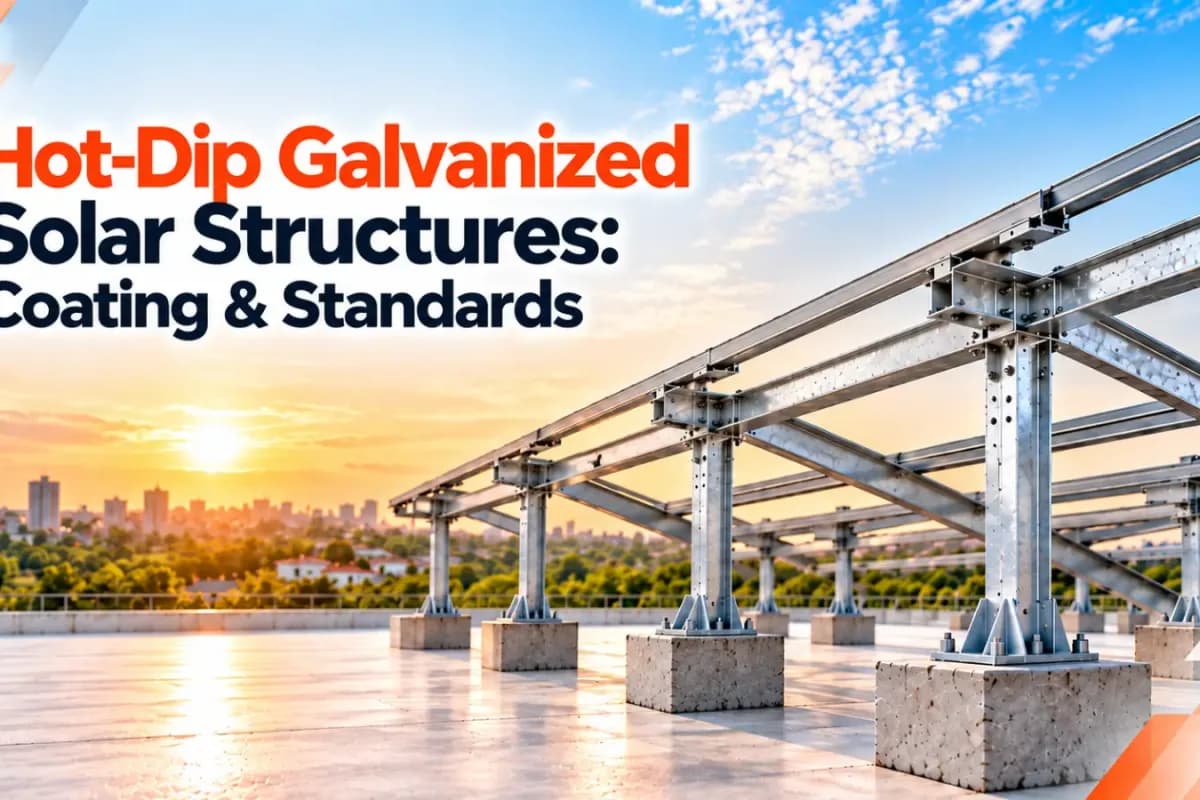
Solar panels are built to generate electricity for decades. However, the steel structures that support them must withstand rain, heat, wind and corrosion throughout their service life. This is why hot-dip galvanising plays an important role in solar installations.
A hot-dip galvanised solar structure has a protective zinc coating that helps prevent rust and extends the life of its steel components. The thickness of this coating, the surrounding environment and the quality of the galvanising process all affect long-term performance.
Whether you are planning a rooftop installation or a large solar farm, understanding coating thickness, service life and relevant standards can help you make a better choice.
Here is what you need to know before selecting a galvanised solar mounting system.
What Is a Hot-Dip Galvanised Solar Mounting Structure?
A hot-dip galvanised solar mounting structure is a steel framework coated with zinc through a hot-dip galvanising process. The fabricated steel components are cleaned and immersed in molten zinc, creating a protective coating over their surfaces.
This coating serves two main purposes. First, it acts as a barrier between steel and the surrounding environment. Second, zinc provides sacrificial protection, which helps protect exposed steel even when small areas of the coating are damaged.
A galvanised solar structure may include purlins, columns, rails, braces, cleats, plates and other structural components. These parts work together to support solar modules and transfer loads safely to the roof or ground foundations.
Hot-dip galvanising is particularly useful for outdoor solar projects because the supporting steel remains exposed to changing weather conditions for many years.
Why Is Zinc Coating Thickness Important?
Zinc coating thickness is one of the key factors that determines how well a galvanised steel solar mounting structure resists corrosion. In general, a thicker coating provides a larger reserve of zinc that can be consumed before the underlying steel begins to rust.
However, thickness alone does not determine durability. Steel thickness, surface preparation, coating quality, drainage, installation practices and local environmental conditions also matter.
For solar projects, coating thickness should be specified according to the applicable standard and the actual site conditions. A coating suitable for a dry inland location may not offer the same service life in a coastal or heavily polluted area.
Recommended Coating Thickness by Environment
The following ranges can serve as an initial guide for project planning. They are indicative values, not universal requirements for every steel component.
For a solar panel mounting structure galvanised steel system, the specification should also account for smaller fittings, connection plates and other components that may have different coating requirements.
- Standard inland areas: Around 65-85 microns may be considered, subject to the applicable standard and steel thickness.
- Industrial or polluted areas: Around 100-120 microns may be considered where higher corrosion resistance is needed.
- Coastal or high-salinity areas: Coatings of 120 microns or more may be considered, alongside suitable alternative coating systems where necessary.
How Long Does a Galvanised Solar Structure Last?
The service life of a galvanised solar structure depends largely on how quickly the zinc coating is consumed by the surrounding environment.
In many inland locations, a properly galvanised structure can provide several decades of service. A planning estimate of 25-35 years or more may be achievable under suitable conditions, but it should not be treated as a guaranteed lifespan.
Coastal locations can present greater challenges because salt deposits and moisture accelerate corrosion. Industrial sites may also expose steel to airborne chemicals and pollutants. In these environments, a thinner or unsuitable coating may deteriorate much faster.
Factors That Affect Service Life
A long-lasting hot-dip galvanised solar structure therefore depends on more than zinc thickness. Proper design, manufacturing, installation and maintenance must work together.
- Local climate: Frequent rainfall, high humidity and prolonged wetness can increase corrosion risk.
- Salt exposure: Sea spray and salt deposits make coastal sites more demanding. Regular inspections and a suitable corrosion protection system are important.
- Coating quality: Uniform coverage and compliance with the specified galvanising standard help protect the steel more reliably.
- Design and drainage: Water trapped around joints, crevices and connection points can increase corrosion risk. Good detailing allows water to drain and surfaces to dry.
- Installation and maintenance: Scratches, cut edges and damaged coatings need attention. Periodic inspections help identify problems before they become more serious.
Standards for Hot-Dip Galvanised Solar Mounting Structures
Standards help ensure that galvanised steel components meet defined requirements for coating quality, thickness and performance. When selecting a galvanised steel solar mounting structure, check the specifications in the project documents rather than relying on general claims about coating thickness.
IS 4759: Indian Standard for Zinc Coatings
IS 4759 covers hot-dip zinc coatings on structural steel and other iron products. It provides requirements for coating quality and thickness, based on factors such as the type and thickness of the steel component.
For Indian solar installations, this standard is an important reference when specifying galvanised structural members. The required coating thickness should be confirmed for each relevant component.
IS 2062: Structural Steel Quality
IS 2062 covers the requirements for hot-rolled structural steel. It helps establish the quality and mechanical properties of the steel used in structural applications.
However, it is important to understand the difference: IS 2062 addresses the base steel, while IS 4759 addresses the zinc coating. Both may be relevant to a solar panel mounting structure galvanised steel system.
How Is a Hot-Dip Galvanised Solar Structure Manufactured?
The galvanising process has a direct impact on the quality and consistency of the finished coating.
A controlled process helps produce a more consistent coating. Inspection should verify that the finished components meet the agreed requirements.
For example, a galvanised steel solar mounting structure may use C and Z purlins, cleats and plates alongside other fabricated steel sections. Each component must be suitable for its intended structural role and corrosion exposure.
A typical process includes the following stages:
- Cleaning: Oil, grease and other contaminants are removed from the steel surface.
- Rinsing and pickling: The steel is cleaned further, and pickling removes rust and mill scale.
- Fluxing: A flux treatment helps prepare the surface for galvanising.
- Drying: Moisture is removed before the steel enters the zinc bath.
- Zinc immersion: The prepared steel is immersed in molten zinc to form a protective coating.
- Cooling and inspection: The component is cooled and inspected for coating quality and compliance with the required specification.
Why Choose Galvanised Steel for Ground-Mounted Solar Projects?
A ground-mounted solar structure galvanised steel system must still be designed for local wind loads, soil conditions, foundation requirements and the weight of the solar modules. Galvanising protects the steel against corrosion; it does not replace structural engineering.
The same principle applies to a hot-dip galvanised solar structure installed on a rooftop. The design must account for roof conditions, attachment points, drainage and the loads transferred to the building.
Large solar farms need mounting structures that can support modules while remaining exposed to the elements. A ground-mounted solar structure galvanised steel system offers several practical benefits.
- Corrosion protection: The zinc coating helps protect steel against rust.
- Long-term durability: A suitable coating can reduce the need for frequent corrosion-related repairs.
- Structural reliability: Properly designed steel sections provide support against the loads considered in the engineering design.
- Manufacturing flexibility: Steel components can be fabricated into different shapes and sizes to suit project requirements.
- Maintenance planning: A durable coating can help manage maintenance needs over the project's operating life.
What Should You Check Before Buying a Galvanised Solar Mounting Structure?
A properly specified galvanised solar structure can offer better long-term value when coating quality, structural performance and site conditions are considered together.
Before approving a supplier or placing an order, check these points:
- Coating specification: Confirm the required zinc coating thickness and applicable standard.
- Material quality: Check the grade and thickness of the base steel.
- Inspection records: Request relevant coating thickness measurements and quality documentation.
- Component coverage: Confirm that the specification covers the required structural members, fittings and connection components.
- Site exposure: Assess whether the project is inland, industrial or coastal.
- Installation requirements: Check that handling, cutting and assembly will not leave critical areas inadequately protected.
- Warranty conditions: Review what the warranty covers and any inspection or maintenance requirements.
Conclusion
Hot-dip galvanising is an important part of protecting steel solar mounting systems from corrosion. However, the right coating thickness depends on the steel component, the governing standard and the environment in which the structure will operate.
A well-designed hot-dip galvanised solar mounting structure combines suitable base steel, a compliant zinc coating, good drainage and careful installation. By checking standards such as IS 4759, project owners can make more informed decisions about coating quality.
Whether you are planning a rooftop installation or a ground-mounted solar structure galvanised steel project, specify the coating before procurement and verify it through inspection. This approach helps support a durable structure and reliable solar generation over the long term.