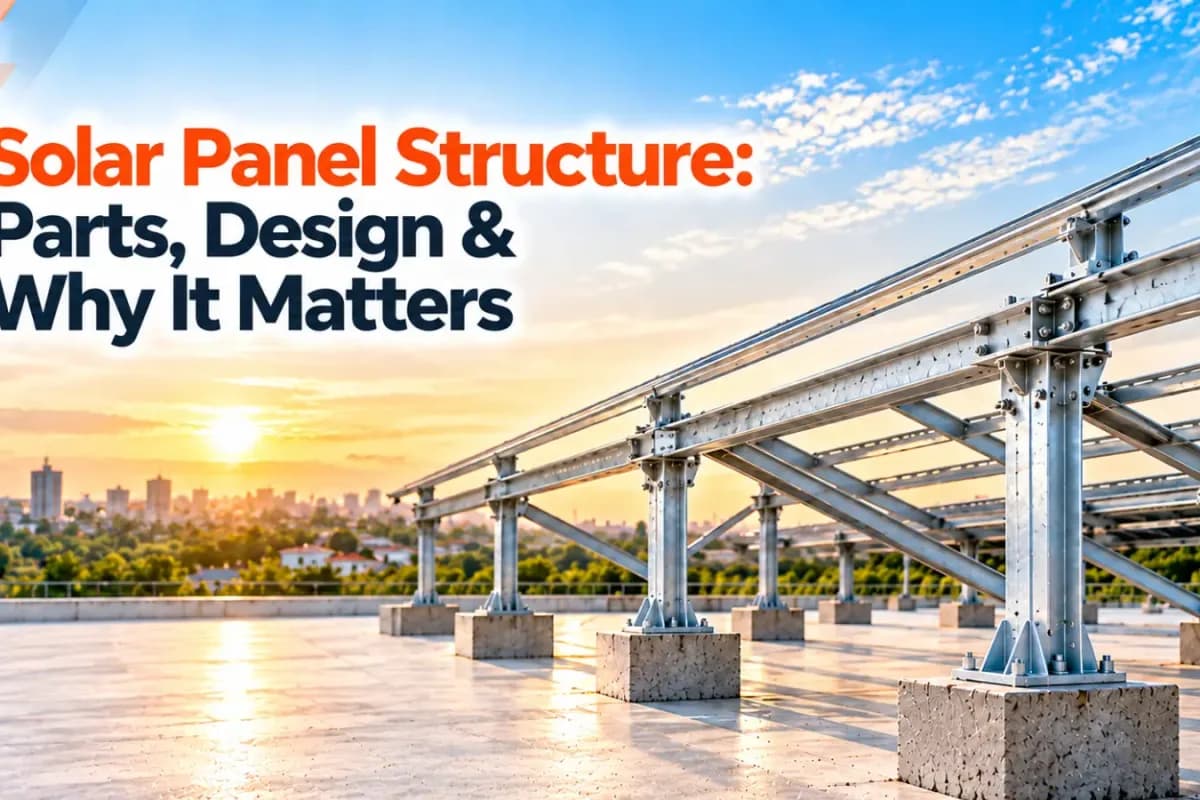
Solar panels need more than sunlight to produce electricity efficiently. They also need a strong, stable and well-designed support system. This is where a solar structure plays an important role. It holds the panels in place, maintains the correct tilt and orientation and protects the installation against wind, rain and other environmental conditions.
A well-designed solar panel structure can improve system reliability, simplify maintenance and support long-term energy production. However, the right design depends on several factors, including the installation site, roof type, soil conditions, local weather and solar panel layout.
In India, these factors are especially important due to heavy monsoon rainfall, high temperatures, coastal humidity and strong winds in many regions.
Understanding the parts, types and design considerations of a solar module structure helps property owners, EPC contractors and project developers make informed decisions.
What Is a Solar Panel Structure?
A solar panel structure, also known as a module mounting structure (MMS), is the framework that supports solar panels and secures them to a roof, the ground or another suitable surface.
Its main purpose is to keep the panels stable while positioning them at an angle that allows them to receive sunlight effectively. It must also transfer the weight of the panels and the forces acting on them safely to the supporting roof or ground.
A solar panel installation structure is usually made from galvanised steel or aluminium, depending on the application, design requirements and project budget. Steel is widely used for large ground-mounted and rooftop projects because of its strength and suitability for structural applications.
The structure is not simply a frame for holding panels. It is an important part of the solar power system, as its design affects safety, durability, maintenance access and long-term performance.
What Are the Main Parts of a Solar Structure?
A solar structure consists of several components that work together to support the panels and distribute loads. Each part has a specific function, and the complete assembly must be designed to suit the site conditions.
Columns and Posts
Columns or posts form the main vertical supports of the structure. In ground-mounted projects, they are fixed into suitable foundations or driven into the ground, depending on the soil and engineering design.
For rooftop installations, the supporting arrangement depends on the roof type and mounting method. Columns must carry the loads transferred by the beams and distribute them safely to the foundations or roof structure.
Main Beams and Rafters
Main beams and rafters form the primary load-bearing framework. They connect the supports and carry the weight of the mounting rails, solar panels and other components.
These members must have adequate strength and stiffness to limit bending and maintain the intended panel alignment. Their size and spacing depend on the panel layout, support spans and expected loads.
Purlins and Mounting Rails
Purlins are secondary structural members that support the panels directly or carry the mounting rails to which the panels are attached.
Their spacing must match the solar module dimensions and the manufacturer's clamping requirements. Correct positioning helps distribute loads evenly and reduces the risk of excessive movement or stress on the panels.
Bracing
Bracing consists of diagonal members that improve the stability of the framework. It helps the structure resist sideways forces caused by wind and other design loads.
Without suitable bracing, a frame may sway or deform under pressure. Properly designed bracing helps maintain the shape and stability of the solar panel installation structure throughout its service life.
Mid Clamps and End Clamps
Clamps secure solar modules to the mounting rails. Mid clamps hold adjacent panels along their shared edges, while end clamps secure panels at the outer edges of a row.
The correct clamp type, position and tightening torque are essential. Poor installation can allow panels to move or create excessive pressure on the module frame.
Fasteners and Hardware
Bolts, nuts, screws and other fasteners connect the structural components. Stainless steel or suitably protected fasteners may be used, depending on the application and exposure conditions.
Compatible materials, correct tightening and suitable corrosion protection help maintain secure connections. Fasteners should also be inspected during routine maintenance.
What Are the Different Types of Solar Panel Structures?
The choice of solar panel structure depends on where the panels will be installed, the available space and the building or ground conditions. Each design offers different benefits.
Fixed-Tilt Ground-Mounted Structures
These structures are installed on open land, farms and solar power plants. Steel supports hold the panels at a fixed angle to capture sunlight throughout the year.
The foundation design depends on soil strength, wind loads and site conditions. A well-planned ground-mounted solar structure also allows enough space between panel rows to reduce shading and support cleaning and maintenance.
Flat-Roof Structures
Flat-roof mounting systems are commonly used on commercial buildings, factories and residential properties. The frame may be anchored to the roof or supported by ballast, such as concrete blocks.
Before installation, the roof's load-bearing capacity and waterproofing must be assessed. The solar panel installation structure should also allow proper drainage and safe access for maintenance.
Elevated and High-Rise Structures
Elevated structures raise solar panels above the roof or ground. They can be useful where space is limited or where the area below needs to remain accessible.
For example, elevated frames may provide clearance for water tanks, walkways or other rooftop equipment. However, greater height can increase wind forces, so the columns, bracing and foundations require careful engineering.
Metal Roof and Tin-Shed Structures
Factories, warehouses and industrial buildings often use metal sheet roofs. Specialised clamps or mounting brackets can secure the panels to suitable roof members.
The mounting method must suit the roof profile and material. Installers should avoid damaging the sheets or compromising waterproofing. The roof structure must also be checked to ensure it can carry the additional weight and wind loads.
RCC Ballasted Structures and Solar Carports
RCC ballasted systems use concrete weights to hold the mounting frame in position, reducing the need for roof penetrations where the design permits.
Solar carports, meanwhile, combine vehicle shelter with electricity generation. Their taller frames and exposed positions make wind resistance, foundation strength and safe vehicle clearance particularly important.
What Factors Influence Solar Structure Design in India?
A solar module structure must suit the local environment and installation site. The following factors help determine whether the design will remain safe and reliable over time.
Wind, Rain and Other Environmental Loads
Strong winds can create pressure and uplift forces that pull panels away from their supports. Heavy rain can also affect foundations, drainage and exposed connections.
Designers must consider the relevant wind speed, terrain, building height and site exposure. They should follow applicable Indian structural design standards, including IS 875 where relevant, and account for other loads required by the project.
Corrosion Resistance and Galvanisation
Steel structures can corrode when exposed to moisture, coastal salt and industrial pollutants. Hot-dip galvanisation provides a protective zinc coating that helps prevent rust and extends service life.
The required coating thickness and inspection process should follow the applicable specifications and exposure conditions. A galvanised solar structure also needs compatible fasteners and proper protection at damaged or cut surfaces.
Tilt Angle, Orientation and Shading
The tilt and orientation of the panels affect how much sunlight they receive. The ideal arrangement depends on the location, roof direction, seasonal requirements and available space.
Designers must also check for shadows from nearby buildings, trees and rooftop equipment. Correct row spacing and panel positioning help reduce shading losses without wasting valuable installation space.
Roof Strength, Soil and Foundation Design
For rooftop projects, engineers must check the existing structure before adding solar equipment. For ground-mounted projects, soil conditions help determine the foundation type and depth.
A suitable solar panel installation structure transfers loads safely to the roof or ground. Skipping these checks can lead to structural damage, movement or costly repairs.
Why Does Solar Panel Structure Quality Matter?
The mounting framework affects more than the physical stability of a solar installation. Its quality also influences operating costs, safety and maintenance.
- Long-term reliability: Strong members and secure connections help the system withstand environmental loads.
- Corrosion protection: Suitable materials and coatings reduce deterioration, particularly in humid and coastal areas.
- Better energy performance: Correct positioning and reduced shading help panels receive more sunlight.
- Simpler maintenance: Adequate access makes cleaning, inspection and repairs easier.
- Lower lifetime costs: A durable solar structure can reduce the need for premature replacement and repeated repairs.
How to Choose the Right Solar Panel Installation Structure
Before selecting a system, consider the following points:
- Identify the installation site: Check whether the project requires a rooftop, ground-mounted, elevated or carport design.
- Assess structural requirements: Review the roof capacity or soil conditions, along with wind and other design loads.
- Select suitable materials: Compare galvanised steel and aluminium based on strength, corrosion exposure and project needs.
- Check design compatibility: Ensure the frame suits the panel dimensions, mounting points, tilt and layout.
- Review quality and compliance: Check material specifications, coating quality, fasteners and relevant engineering standards.
- Plan for maintenance: Allow safe access for cleaning, inspection and component replacement.
Conclusion
A solar panel structure is a key part of a safe and efficient solar power system. Its columns, beams, purlins, bracing, clamps and fasteners work together to support the panels and transfer loads safely.
From ground-mounted solar farms to factory rooftops and solar carports, every application requires a design suited to its location and purpose. In India's varied climate, wind resistance, corrosion protection, foundation strength and correct panel positioning deserve particular attention.
By choosing a well-engineered solar structure and maintaining it properly, project owners can improve system reliability, reduce avoidable maintenance costs and support dependable solar energy generation over the long term.